



Liverpool arrived at the Orange Velodrome with a mission to take a decisive step toward automatic qualification for the Champions League last 16. Against a spirited Olympic De Marseille side that leads Ligue 1 in goals scored this season, this was no routine assignment as Liverpool delivered a commanding, controlled and tactically intelligent performance that felt as mature as it was decisive.
From the outset, Liverpool’s approach was measured but purposeful. They showed respect for Marseille’s offensive threat, but they weren’t content simply to manage the game. A setup that blended defensive solidity with structured attacking movements allowed them to control both tempo and territory without relinquishing defensive responsibility.
Liverpool’s initial possession phases were not about overwhelming with pace as they were about intelligent circulation to probe and unlock Marseille’s defensive shape. With Alisson Becker providing calm distribution from the back, the Reds worked the ball through tight channels, shifting play from one flank to the other, forcing Marseille’s players into lateral movement rather than vertical penetration.
Crucially, this patient build-up was anchored by the creativity of Dominik Szoboszlai and the metronomic calm of Alexis McAllister. Their interplay in midfield ensured Liverpool always had forward options and retained balance when transitions were required. As a result, even though clear chances were limited in the opening exchanges, Liverpool were always a pass away from testing Marseille’s organisation.
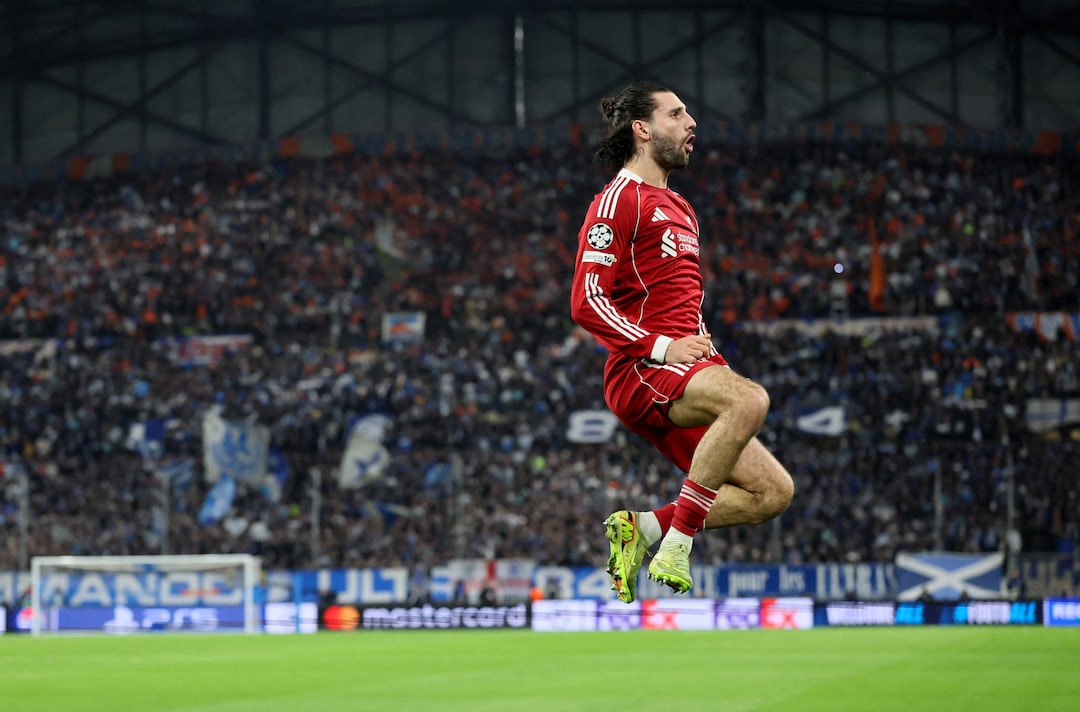
The breakthrough came at a pivotal moment just before half-time. In first-half stoppage time, Liverpool won a free kick just outside the Marseille penalty area. Dominik Szoboszlai, always a threat from set-pieces this season, took responsibility. With the weight of expectation and spectators bearing down, he struck a low, cunning delivery that sailed under the jumping wall and nestled just inside the near post. The goalkeeper was wrong-footed, and Liverpool led 1-0 at the interval. It was not only a moment of individual brilliance but a striking example of tactical awareness exploiting defensive positioning and uncertainty under pressure.

Marseille emerged after the break with intent. Led by forward Mason Greenwood and supported by Timothy Weah and Hamed Traore, they sought to increase tempo and test Liverpool’s defensive resolve. Moments earlier in the second period — notably a well-struck effort from Greenwood forced Alisson into key saves, reminding everyone that Ligue 1’s top scorers were not to be underestimated.
At the heart of Liverpool’s ability to weather this spell was the combination of Virgil Van Dijk and Joe Gomez at centre-back. With captain Van Dijk making his 350th appearance for the club, the duo maintained a compact, disciplined line that thwarted Marseille’s advances and snuffed out most threats long before they developed into danger. Their communication, timing in interceptions, and coverage of space kept the visitors in control even when possession briefly shifted toward their own third.
As the match approached its closing stages, Liverpool’s control began to reassert itself. In the 72nd minute, that became clear, not through a dazzling strike but through opportunistic pressure. Jeremie Frimpong accelerated down the right flank with pace and intent, delivering a low cross into the six-yard area. The ball took a deflection off Marseille goalkeeper Geronimo Rulli and trickled into the net. Though officially an own goal, the score was born of Liverpool’s tactical willingness to press high and force errors in the final third.
That second goal shifted the game from controlled advantage to comprehensive ascendancy. Liverpool’s players did not relax; they maintained positional discipline and continued recycling possession intelligently to deny Marseille any foothold.
Liverpool weren’t done. In stoppage time, substitute Cody Gakpo capped a fine European night by adding a third goal. After a quick counterattack, a perfectly weighted pass found Gakpo inside the box, and his composed finish into the bottom corner ensured that the victory would be sealed emphatically at 3-0. It was the kind of goal that reflects not only individual technique but also Liverpool’s ability to stretch the game and exploit space even when the outcome seemed already secure.

This victory lifts Liverpool, firmly placing them on course for automatic qualification to the Champions League Round of 16. Marseille, despite their attacking credentials in domestic competition, remain in the hunt for a playoff spot with nine points but will need a result in their final group game to keep European hopes alive.
In a competition where fine margins matter, Liverpool delivered a performance that combined strategic intelligence with individual quality. They controlled tempo, applied pressure without recklessness, and took their chances decisively, a blueprint for success on Europe’s grandest nights.