



Chelsea’s bid for a crucial home victory was dramatically halted in stoppage time as Zian Flemming headed in a late equalizer to earn Burnley a 1–1 draw at Stamford Bridge. The Blues had appeared in control early through an incisive opener from Joao Pedro, only for discipline issues and a late lapse after a red card to unravel their advantage in the dying moments.
The result once again highlighted Chelsea’s ongoing struggles to close out matches from winning positions, while Burnley’s persistence and organization under pressure yielded a valuable point in their battle against relegation.
Chelsea began the game with clear attacking intent, pressing aggressively from the outset and controlling possession in Burnley’s half. The home side’s fluid front line caused early confusion in Burnley’s defense, with Moises Caicedo and Pedro Neto linking up effectively in transition.
Their pressure paid off in the 4th minute, when a directly worked Chelsea move ended with Joao Pedro finding space inside the box. With composure and precision, the Brazilian forward finished low past the Burnley goalkeeper to give the Blues an early 1–0 lead, a goal that settled Stamford Bridge and forced Burnley onto the back foot.

Burnley, however, did not retreat entirely. They gradually grew more compact and disciplined, seeking to absorb pressure and disrupt Chelsea’s rhythm. Midfield battles between James Ward‑Prowse and Moisés Caicedo were physical and tense, with neither side yielding much territory.
Despite Chelsea’s territorial dominance, clear goalscoring opportunities remained hard to come by after the opener. A curling shot from Cole Palmer drew a solid save from Burnley’s keeper, and another well‑placed delivery from Joao Pedro narrowly escaped the far post as half‑time approached.
Chelsea continued to control possession in the second half, with their attacking shape seeking to stretch Burnley’s defense wide and create opportunities through quick combinations and crosses.
Bright moments for the Blues came through sustained pressure, including a driving run by Palmer that forced a comfortable save, but Burnley’s backline, marshalled by their centre‑backs, remained sturdy. They limited clear cut chances and stifled many of Chelsea’s final third entries.
That defense was given a crucial boost when Burnley James Ward‑Prowse produced a dangerous delivery from a wide free kick, forcing Chelsea to defend urgently inside their own six‑yard box. But despite the threat, the hosts began to dominate territorial play and looked in control.
However, the match took a dramatic turning point in the 72nd minute when defender Wesley Fofana was shown a second yellow card for a mistimed challenge. The dismissal reduced Chelsea to 10 men and shifted the momentum of the game in Burnley’s favor.
From that moment, Chelsea’s ability to control the game became more difficult. The visitors sensed an opening and began to commit more players forward, increasing the intensity inside the home penalty area.
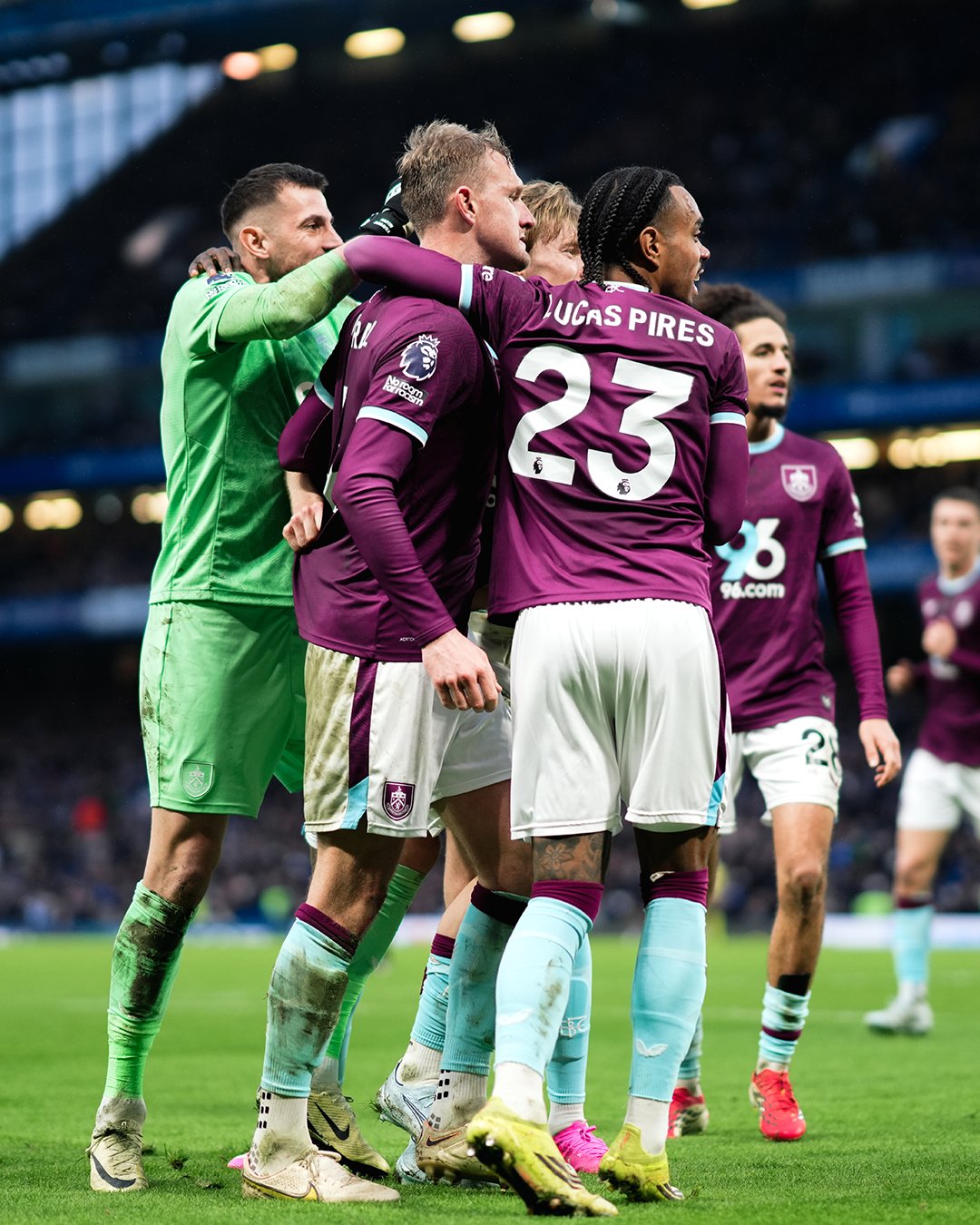
With Burnley pushing for an equalizer in the final stages, Chelsea defended resolutely. But in the third minute of added time (90’+3′), James Ward‑Prowse delivered a dangerous corner that found Zian Flemming unmarked at the near post. The Burnley attacker rose highest and powered a header into the roof of the net, sparking wild celebrations among the away supporters and securing a dramatic 1–1 draw.
Just moments earlier, Burnley had almost taken the lead again when Jacob Bruun Larsen went for an aerial finish but mis‑connected, highlighting how close the visitors came to snatching all three points.
Chelsea’s final attacks, including a late effort from Liam Delap, were stopped just short as the full‑time whistle confirmed the richly deserved point for Burnley and deflating disappointment for the Blues.
Chelsea’s game plan was clear, dominate possession, create angles between the lines, and use the creativity of Joao Pedro and Cole Palmer to destabilize Burnley’s defensive shape. The early goal reflected this structure, with the Blues controlling central zones and making high‑tempo forward passes that disrupted the visitors.
The setback came not from a tactical failing, but from discipline. Fofana’s dismissal in the second half dramatically altered the game’s balance, forcing Chelsea to adjust their shape and protect space with one fewer defender. Burnley capitalized immediately, gaining confidence and pressing higher up the pitch.
Burnley’s approach was disciplined and organized, especially in their defensive work after conceding early. Their persistence and structured pressing kept Chelsea from extending their lead, and once the red card came, Burnley grew into the game, exploiting the extra space on transitions and set‑pieces.
Flemming’s late goal was the culmination of that resilience, a reward for sticking to their game plan even when trailing away at Stamford Bridge.
For Chelsea, this draw represents yet another instance of dropped points from winning positions, a pattern that has frustrated supporters and pundits alike this season. Despite showing quality early on, the Blues were unable to manage the game under pressure and lost ground in their fight for European qualification.
For Burnley, the point is invaluable. The visitors showed tactical discipline and belief, and with the mental strength to press late and capitalize on set‑piece opportunities, they leave Stamford Bridge with momentum and confidence in their survival battle.
This was a Premier League clash that delivered on drama and narrative arc, early dominance, a game‑changing dismissal, and a stoppage‑time equalizer that swung the emotion from despair to joy for Burnley and heartbreak for Chelsea.