



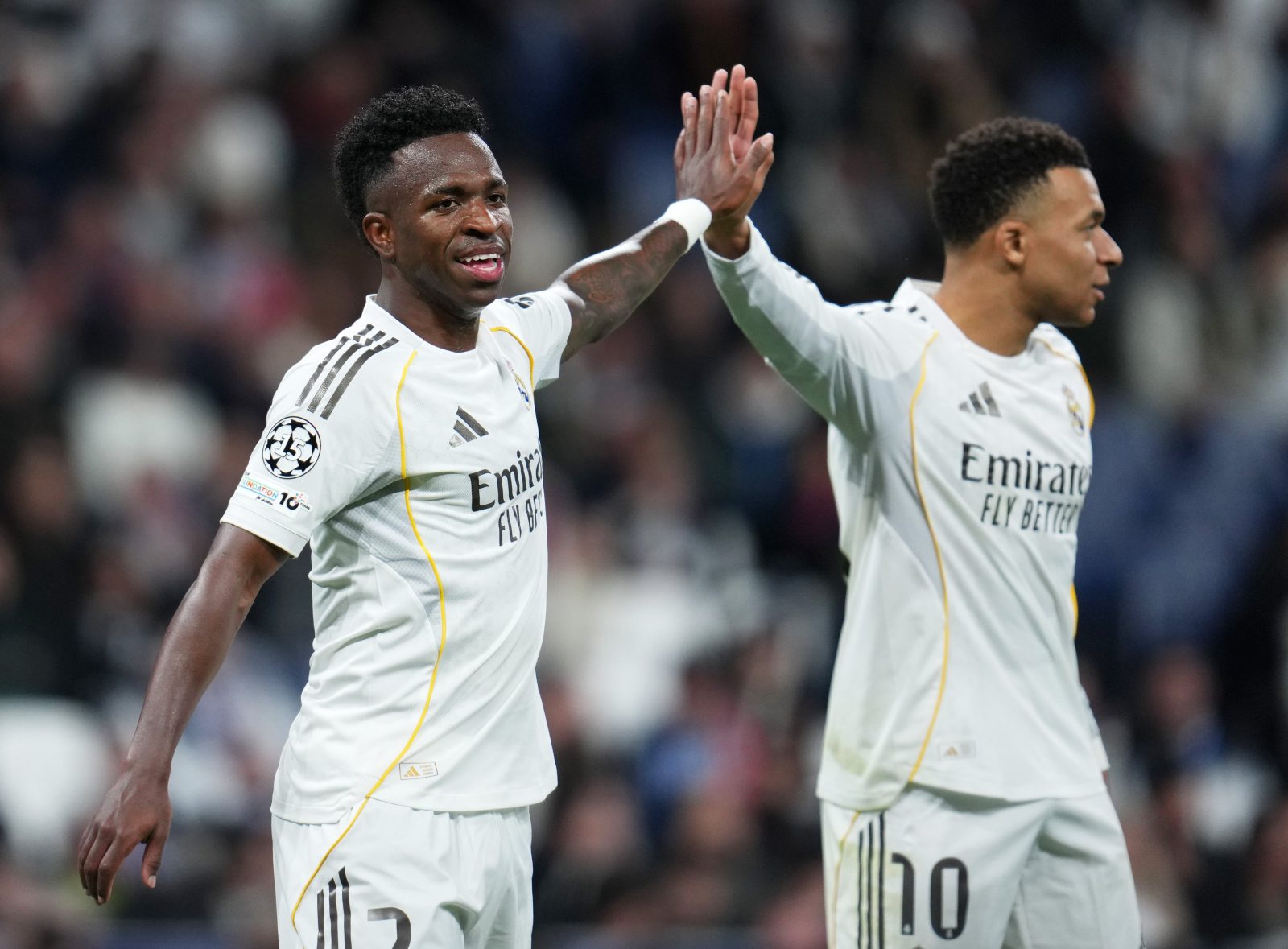
The Santiago Bernabeu, a stadium steeped in European history and drenched in expectation, can be an unforgiving place on nights when Real Madrid falters, in a Champions League group stage match that carried both pressure and opportunity, Los Blancos delivered one of their most emphatic performances of the season a 6-1 thrashing of AS Monaco that reasserted their elite identity with style, intensity, and ruthless efficiency.
This wasn’t just a victory on paper; it was a tactical and emotional recovery. Madrid had recently endured a turbulent run including the abrupt departure of former manager Xabi Alonso and a couple of lackluster European results before this night and they needed a statement win. Under new coach Alvaro Arbeloa, the team responded with conviction, balance, and strategic clarity in a performance that left Monaco overwhelmed and the Bernabéu crowd roaring
Real Madrid set their stall out long before the first whistle. Their intent was unmistakable: control the tempo, press aggressively without the ball, and exploit Monaco’s high defensive line with pace and vertical movement. On a pitch where opposition teams often feel the pull of Madrid’s aura, the hosts were sharp, focused, and daring right from kick-off.
Just five minutes in, the first tactical blow landed. Kylian Mbappe, playing against one of his former clubs, capitalized on an incisive pass from Fede Valverde to slot home clinically and give Madrid the early advantage. This goal wasn’t merely about finishing it was a psychological declaration. Madrid was not here to manage; they were here to dominate.
Monaco, which had traveled to Spain with hopes of disrupting Madrid’s rhythm, suddenly found themselves on the back foot. Madrid’s press pinned them deeper, forced hurried clearances, and didn’t allow the visitors to establish any meaningful foothold in possession.
Before the half hour mark, Madrid’s dominance had translated into a second goal. In the 26th minute, Mbappé was at the heart of it again. This time, he finished a well worked goal from midfield to Vinicius Jr who squared play a perfect pass to make it 2-0, doubling the hosts’ lead with ruthless efficiency. The timing of this second goal was critical it came just as Monaco seemed to be settling into the game, denying them the confidence needed to build momentum.

Monaco, already under pressure, were forced into reactive defending. Their high line looked vulnerable to Madrid’s direct play, and spaces began to open up in dangerous zones.
The second half resumed with Monaco determined to stem the tide, but they were undone almost immediately. In the 51st minute, Franco Mastatuono made it 3-0, a goal born more of positioning and timing than pure speed, exploiting the gaps left as Monaco pushed players forward in search of a lifeline. Madrid sensed vulnerability and pounced.
Fewer than ten minutes later, the scoreline ballooned further when Monaco defender Thilo Kehrer inadvertently turned a low cross into his own net. It was the kind of moment that highlighted Monaco’s growing fatigue and tactical confusion: choices were rushed, communication faltered, and Madrid’s structured attacks continued to penetrate unabated.
At 63 minutes, the Bernabéu crowd were on their feet once more as Vinicius Jr. delivered a moment that captured the evening’s escalating intensity. Picking up the ball with space in front of him, Vinícius danced past defenders and rocketed a strike into the top corner a goal as aesthetically breathtaking as it was tactically fitting. It represented how Madrid could shift from disciplined structure to individual brilliance without losing harmony.
Monaco did find a moment of reprieve in the 72nd minute, when Jordan Teze capitalized on an uncharacteristic error from Madrid midfielder Dani Ceballos to pull one back. It was Monaco’s only goal of the night, its only glimmer in a match that had otherwise been a cascade of Madrid’s dominance. Yet within eight minutes, Madrid had erased any threat of a comeback.
In the 80th minute, Jude Bellingham sealed the emphatic win with his own strike, finishing a swift counterattack with clinical precision. The goal was more than just another tick on the scoreboard it underscored Madrid’s tactical flexibility: the ability to transition instantly from organized pressing to opportunistic scoring.

Real Madrid’s 6-1 victory was not born of luck or the happenstance of a weak opponent. Monaco, in truth, have endured a difficult season with form and personnel challenges, and they struggled to cope with Madrid’s multi-layered approach. But the merit of Real Madrid’s performance lay in how well they executed their strategy:
For manager Alvaro Arbeloa, this was also a personal vindication his first Champions League match in charge and one that quelled a lot of recent doubt. The Bernabéu audience, ever passionate and occasionally critical, had seen enough to roar their approval by night’s end.
By the final whistle, the scoreboard stood at 6-1, a result that carried weight beyond three points. It boosted Real Madrid’s confidence, reinforced their tactical identity under new management, and reshaped their trajectory in the Champions League group phase. Monaco, for their part, will walk away with lessons and an emphatic reminder of what elite tactical execution can do to a side caught between defensive ambition and structural frailty.
In a competition that often hinges on margins measured in inches, seconds, and decisions, this night will be remembered not just for the goals, but for the coherence behind them. Real Madrid, returning to their footballing roots with aggression, clarity, and intelligence, reminded Europe that on nights when everything clicks, even giants can roar louder than expected.