


The Miami Open was supposed to follow a familiar script, top seeds cruising, big names building momentum, and the real drama waiting for the final rounds. But just a few days in, that script is already gone.
This tournament has turned into something else entirely. Upsets, emotional moments, rising stars, and questions around the biggest names in the sport, it’s all happening at once, and it’s happening now.
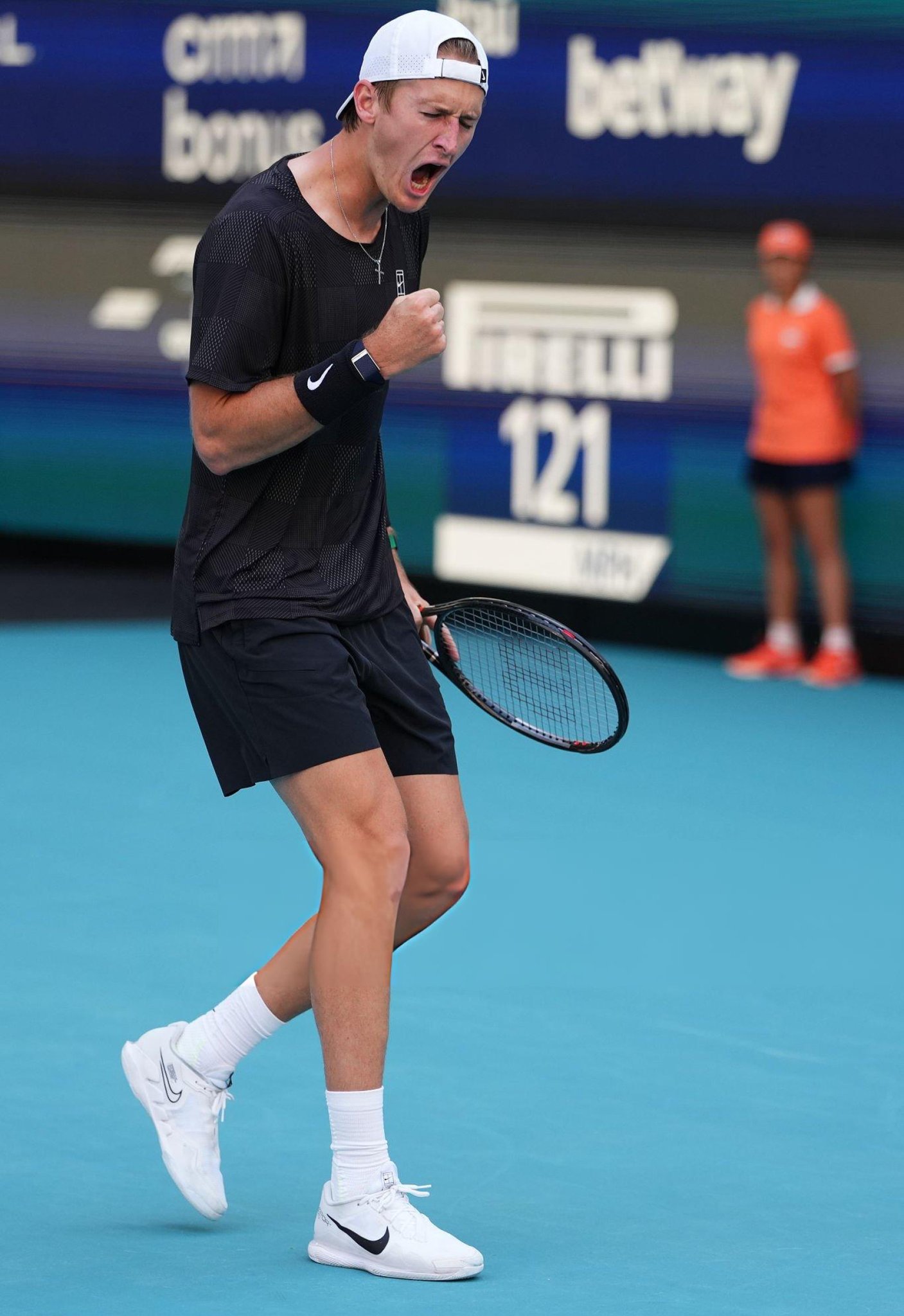
The biggest moment so far came on March 22, and it changed everything. Sebastian Korda stunned world No. 1 Carlos Alcaraz in three sets, 6-3, 5-7, 6-4, in what is already being called the defining upset of the tournament.
This wasn’t just a surprise result, it was a shift in power. Korda didn’t steal the match; he earned it. Even after failing to close it out in the second set and watching Alcaraz fight back, he stayed composed, reset, and took control again in the third.
For Alcaraz, this was only his second loss of the season, a rare off day for a player who has looked almost untouchable in 2026. But for Korda, this is something bigger, a career-defining win that opens up the entire draw. Suddenly, the tournament doesn’t belong to the favorite anymore. It belongs to whoever is ready to take it.
While that shock was unfolding on the men’s side, another kind of story was playing out on the women’s side, one that goes beyond tennis. Naomi Osaka exited early after a straight-sets loss, but what came after mattered more than the result. She spoke openly about how her priorities have changed, making it clear that her daughter now comes before tennis.
That’s not something you hear often from a player of her level. Osaka isn’t just fighting to regain form, she’s redefining what success means to her. She still wants to compete, still wants to win, but there’s a different balance now, and that changes the way you look at her comeback. It’s no longer just about titles; it’s about identity.
At the same time, there are growing concerns around another top name. Iga Swiątek suffered a shock early defeat, losing after winning the first set comfortably, a result that raised serious questions about her consistency and mental focus.
For a player who has built her reputation on dominance and control, this kind of collapse stands out. It’s not just the loss, it’s how it happened. From 6-1 up to losing the match, it suggests something deeper than just form. She admitted herself that she needs to simplify her game and reset mentally, which tells you that this is not just a technical issue.
While some of the biggest names are struggling, a different story is quietly building in the background, the rise of the next generation. One of the standout moments came earlier in the tournament when 17-year-old Moïse Kouame made history by becoming one of the youngest players ever to win a match at this level.
This is no longer about potential. These young players are not waiting for their time, they are already stepping into it. The gap between established stars and emerging talent is closing faster than expected, and tournaments like this are where that shift becomes visible.
There’s also a strong local angle developing, especially with American players. Korda’s win is the headline, but it’s part of a bigger trend. Players like Taylor Fritz are progressing, and there’s a growing sense that American tennis is building momentum again, especially on home soil.
And that matters. When local players start performing at this level in a tournament like Miami, it changes the atmosphere, the energy, and even the expectations.
Put all of this together, and you start to see what this tournament is becoming. It’s no longer predictable. The top seed is out early. A global star is rethinking her career. A dominant player is searching for answers. Teenagers are breaking through. And the home players are stepping up.
This is what makes the Miami Open different right now. It’s not waiting for the later rounds to deliver drama, it’s already happening.
And the most important part is this: we’re still far from the final stages.
Which means the biggest stories might still be coming.