



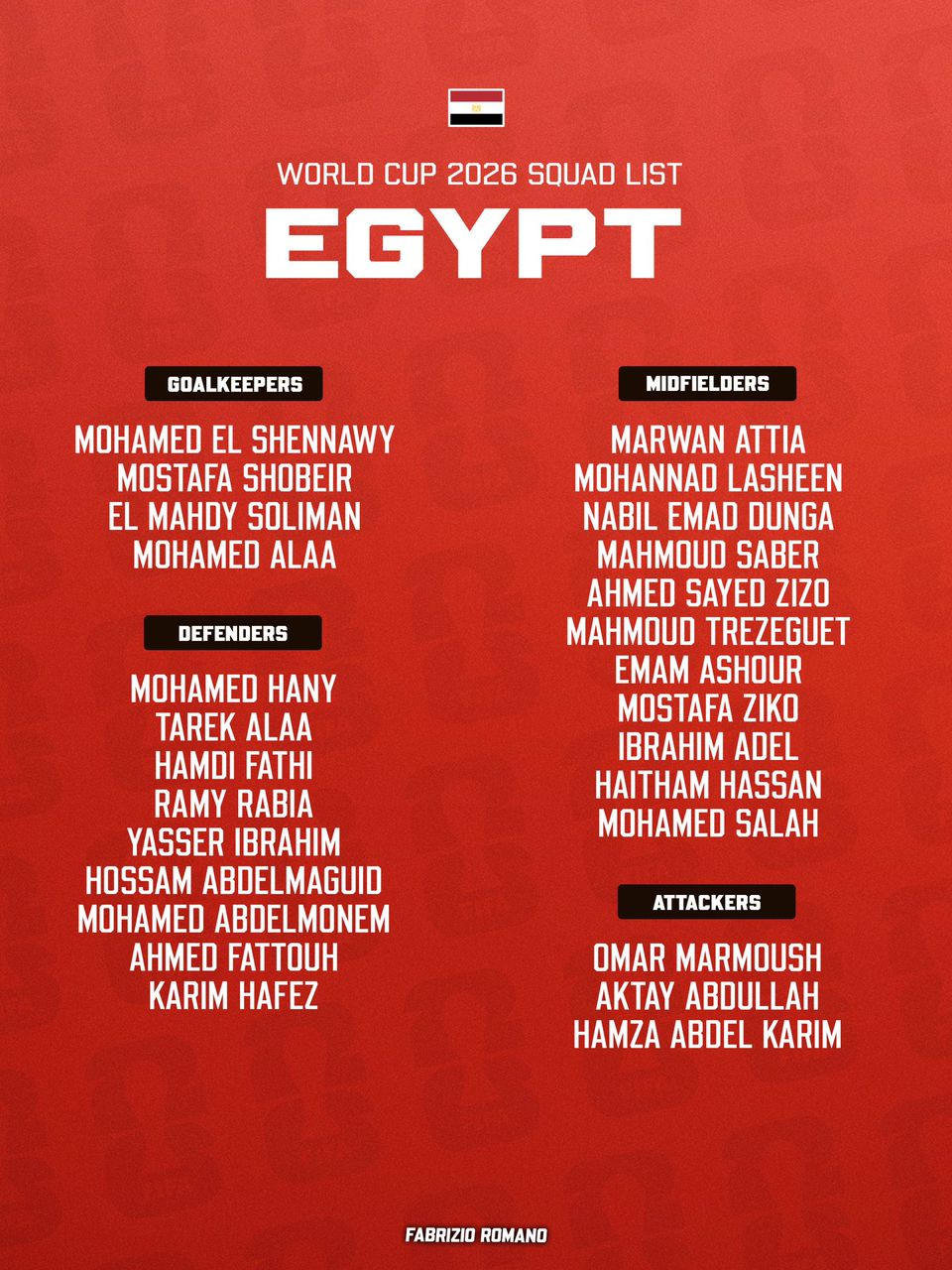
Egypt have officially unveiled their squad for the 2026 FIFA World Cup, and with Mohamed Salah once again leading the nation, belief is rapidly growing that the Pharaohs could become one of Africa’s most dangerous teams at the tournament.
After years of inconsistency on the international stage despite possessing elite talent, Egypt now head into the World Cup carrying renewed optimism, a more balanced squad, and the hope of finally restoring their status among Africa’s footballing giants.
At the center of everything, as expected, stands Mohamed Salah.
The Liverpool superstar remains the face of Egyptian football and enters the tournament with enormous expectations once again placed on his shoulders. For years, Salah has carried the hopes of an entire nation, transforming Egypt back into a globally respected footballing power through his brilliance at both club and international level.
Now, the 2026 World Cup could represent one of the most important moments of his international career.
While Salah was officially listed among the midfielders in Egypt’s squad announcement, his role remains far more significant than positional labels. He is still Egypt’s primary attacking leader, creative outlet, and biggest match-winner heading into the tournament.
In goal, Egypt appear to have maintained stability and experience.
Mohamed El Shenawy once again headlines the selections and remains one of the most trusted figures within the national team setup. His leadership, composure, and tournament experience continue to make him one of Egypt’s most important players despite growing competition from younger goalkeepers.
Mostafa Shobeir, El Mahdy Soliman, and Mohamed Alaa complete the goalkeeping department, giving Egypt reliable depth between the posts.
Defensively, the Pharaohs have selected a physically strong and experienced backline built around organization and discipline.
Mohamed Abdelmonem and Rami Rabia are expected to anchor the center of defense, while Mohamed Hany brings energy and attacking support from wide areas. Ahmed Fattouh and Karim Hafez provide additional width and versatility on the flanks.
Osama Abdelmaguid, Yasser Ibrahim, and Ahmed Eid strengthen Egypt’s defensive options further, with the coaching staff clearly prioritizing balance and defensive structure heading into the tournament.
In midfield, Egypt appear determined to combine physical intensity with technical creativity.
Marwan Attia, Mohamed Lasheen, and Nabil Emad Dunga provide work rate, defensive stability, and control in central areas, while Ahmed Sayed “Zizo” and Emam Ashour bring creativity and attacking movement.
Mahmoud Hassan “Trezeguet” once again offers experience and direct attacking quality, while Ibrahim Adel’s inclusion highlights Egypt’s growing trust in younger attacking talents capable of influencing matches at the highest level.
One of the more intriguing names in the squad is Mostafa Ziko, whose emergence has generated increasing excitement among Egyptian supporters in recent months.
Going forward, Egypt may not possess the same global attacking depth as some of the tournament favorites, but they still carry dangerous profiles capable of causing problems.
Omar Marmoush is expected to play a crucial role alongside Salah after continuing his impressive rise in European football. His pace, movement, and ability to attack space give Egypt another major threat in transition.
Abdallah Hamza and Abdelkarim provide additional attacking options, while the overall system appears designed to maximize Salah’s influence in the final third.
But beyond individual talent, this squad feels symbolic for Egypt in a much larger sense.
For years, the Pharaohs struggled to consistently translate their enormous footballing history into modern international success. Despite being one of Africa’s most decorated football nations, Egypt often entered major tournaments carrying pressure rather than genuine belief.
This time feels different.
The squad may not be filled with global superstars across every position, but it appears organized, experienced, and emotionally driven by the possibility of making history once again on the world stage.
And with Mohamed Salah potentially entering the latter stages of his international career, the urgency surrounding this World Cup feels even greater.
For Egypt, this tournament is about more than participation.
It is about proving that the Pharaohs belong back among football’s most respected nations — and giving one of Africa’s greatest players the international stage his legacy deserves.