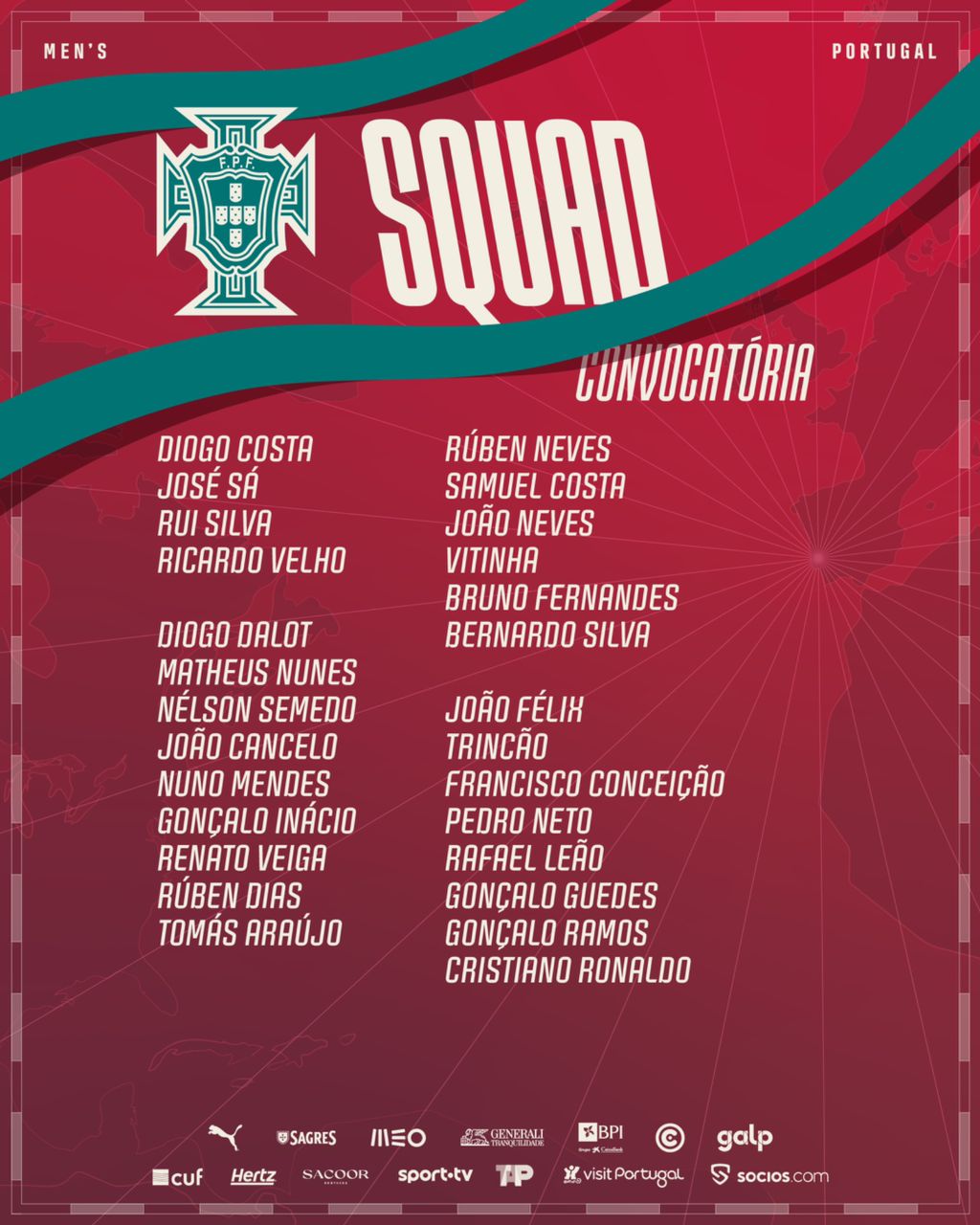
Portugal have officially unveiled their squad for the 2026 FIFA World Cup, and while the list reflects the country’s exciting new generation of talent, one name continues to stand above them all — Cristiano Ronaldo.
At 41 years old, Ronaldo has once again been included in Portugal’s World Cup squad, setting the stage for what could become the final chapter of one of football’s greatest international careers.
But this Portugal team is no longer built solely around him.
Instead, the squad announcement highlights a major transition within Portuguese football — a shift from the Ronaldo era into a new generation packed with technical brilliance, tactical intelligence, and attacking versatility.
Still, Ronaldo’s inclusion instantly becomes the emotional centerpiece of the squad.
The legendary forward remains Portugal’s captain, leader, and all-time greatest goalscorer, and the 2026 World Cup could represent his final opportunity to complete the one achievement missing from his historic international legacy.
Around him, however, Portugal now possess one of the most balanced squads in world football.
In goal, Diogo Costa headlines the selections after firmly establishing himself as Portugal’s first-choice goalkeeper over the last few years. His composure on the ball, reflexes, and ability in high-pressure moments make him one of the most highly rated goalkeepers in international football.
José Sá, Rui Silva, and Ricardo Velho provide strong depth behind him, giving Portugal both experience and reliability between the sticks.
Defensively, Portugal’s squad combines elite experience with emerging talent.
Rúben Dias remains the leader of the backline and will once again be expected to anchor Portugal defensively during the tournament. Alongside him, Gonçalo Inácio and Tomás Araújo represent the future of Portuguese defending, while João Cancelo, Nuno Mendes, Diogo Dalot, and Nelson Semedo provide attacking quality and flexibility from wide positions.
One of the more intriguing selections is Matheus Nunes being listed among the defensive options, highlighting the tactical versatility Roberto Martínez appears to value heading into the World Cup.
Portugal’s midfield may ultimately become the strongest department in the squad.
Bruno Fernandes and Bernardo Silva once again headline a technically gifted midfield capable of controlling games through intelligence, movement, and creativity. Vitinha’s rise into one of Europe’s elite midfielders has given Portugal another world-class option capable of dictating tempo and progressing possession under pressure.
João Neves continues to establish himself as one of the brightest young midfield talents in world football, while Rúben Neves and Samuel Costa add balance, composure, and defensive security.
The variety within Portugal’s midfield gives Martínez several tactical possibilities depending on the opposition, whether through possession dominance or a more direct attacking approach.
But going forward is where Portugal look truly dangerous.
Rafael Leão brings explosiveness and unpredictability in wide areas, while Pedro Neto’s pace and directness offer another major attacking weapon. Francisco Conceição and Trincão provide creativity and flair capable of unlocking compact defenses, while João Félix remains one of the most naturally gifted attacking players in the squad despite continued inconsistency at club level.
Gonçalo Ramos and Gonçalo Guedes add different attacking profiles centrally, giving Portugal flexibility in how they structure their frontline around Ronaldo.
Yet no matter how talented the younger generation may be, the spotlight will inevitably return to Cristiano Ronaldo.
For nearly two decades, Ronaldo has carried the expectations of an entire footballing nation. He delivered Portugal’s first major international trophy at Euro 2016, added the UEFA Nations League, broke virtually every international scoring record possible, and transformed Portugal into a global football powerhouse.
Now, the question is whether he can lead one final charge at football’s biggest prize.
The 2026 World Cup feels different for Portugal.
Unlike previous tournaments where the team often depended heavily on Ronaldo’s brilliance, this squad appears deeper, younger, and tactically more complete. Portugal are no longer simply a team with Cristiano Ronaldo — they are now a genuine collective capable of competing with any nation in the world.
That balance may ultimately become their greatest strength.
With experienced leaders, elite midfield quality, dangerous attacking options, and one of football’s greatest icons making what could be his final