

Staff Reporter
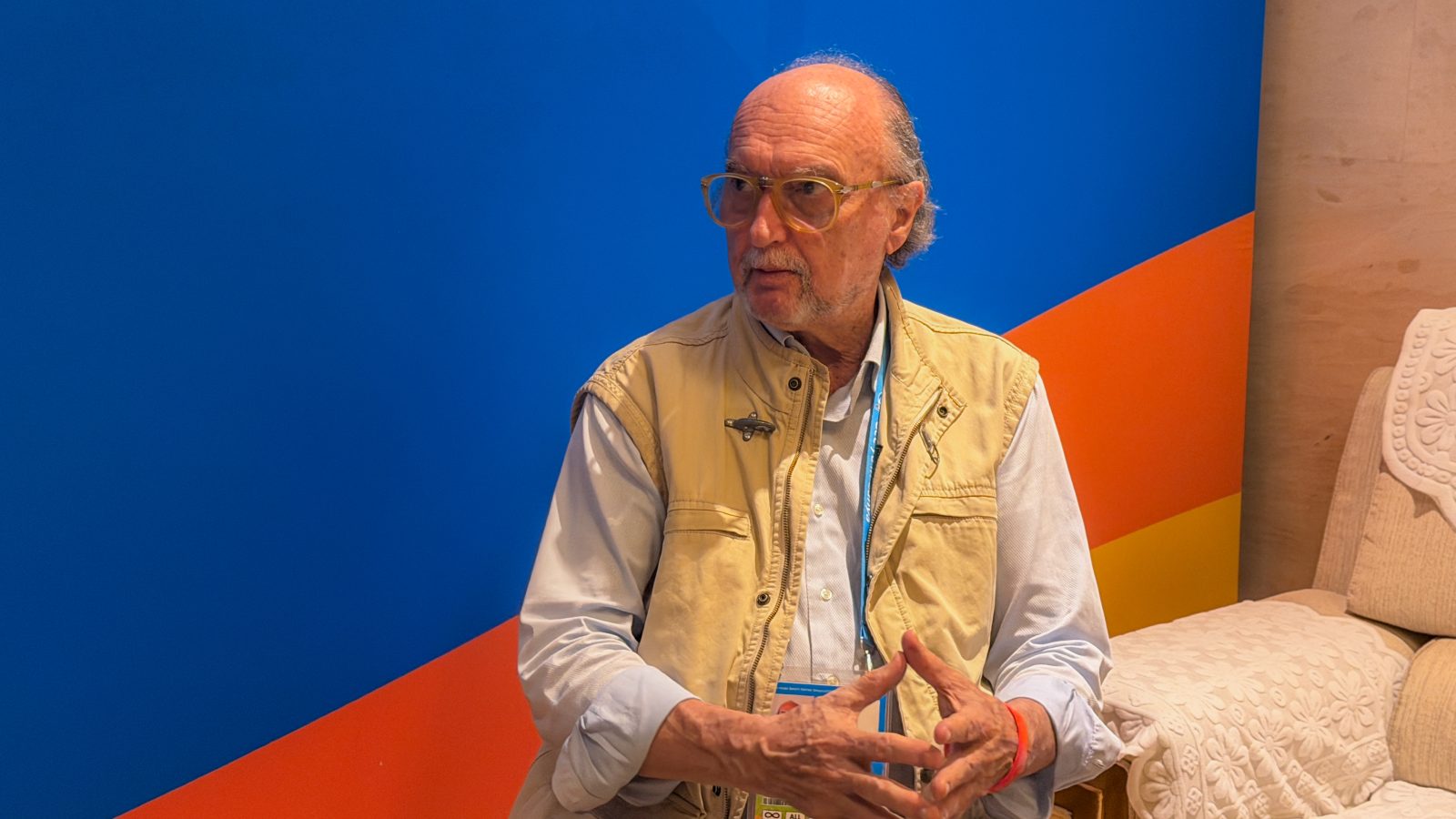
Sanya: President of the International Sports Press Association (AIPS) Gianni Merlo has praised the leadership of the Olympic Council of Asia (OCA) H E Sheikh Joaan bin Hamad Al Thani, describing it as instrumental in strengthening unity across Asia and enhancing the continent’s position on the global sporting stage.
Speaking on the sidelines of the Asian Beach Games Sanya 2026, Merlo said Sheikh Joaan’s presidency of the Olympic Council of Asia comes at a pivotal moment, requiring a broader vision for sport beyond competition. He stressed that sport today serves as a vital platform for dialogue, cooperation, and rebuilding ties between nations.
Merlo highlighted that effective leadership at this stage must go beyond managing events, instead focusing on uniting Asian countries and fostering long-term collaboration. “If he succeeds in rebuilding bridges between countries through sport, it will be an unprecedented cultural achievement,” he noted, underscoring sport’s growing role as a tool for diplomacy and cultural exchange.
He added that strengthening unity across Asia is no longer optional but a strategic necessity, particularly amid evolving regional dynamics. Major sporting events, he said, provide a unique environment for engagement among athletes and youth, helping cultivate mutual understanding and stability. “Sport will be the first to rebuild bridges after tensions subside,” Merlo remarked.
Looking ahead, Merlo pointed to upcoming elections within the Olympic Council of Asia as a critical juncture that will shape the organisation’s future direction. He emphasised the importance of continuity and stability in sustaining long-term sporting development, while also preparing for major competitions such as the Asian Games.
Reflecting on Qatar’s sporting journey, Merlo described the country as a model of rapid transformation. He noted that Qatar has successfully established itself as a global hub for major events through strategic investment in infrastructure, organisation, and media capabilities. “Through sport, Qatar has put itself on the world map,” he said, adding that the country now contributes actively to shaping international sports standards.
On Qatar’s Olympic ambitions, Merlo acknowledged a shift in his perspective, citing the country’s advanced facilities, transport systems, and media infrastructure as key strengths. He noted that while climate considerations remain a challenge, evolving approaches to event scheduling could provide viable solutions, strengthening Qatar’s chances of hosting the Games in the future.
Comparing the FIFA World Cup Qatar 2022 with the upcoming FIFA World Cup 2026, Merlo highlighted the former’s compact and integrated model as a benchmark for efficiency. In contrast, he said the multi-country format of the 2026 edition will pose logistical and financial challenges, particularly for media coverage.
Merlo also touched on the growing stature of the AIPS Awards, noting their role as a global platform for excellence in sports media. He affirmed that Qatar’s partnership has been central to the awards’ continued success and international reach, reinforcing the country’s influence within the global sports media landscape.
The initiative’s success has helped create a supportive ecosystem for the award’s growth, strengthening its international presence and expanding its global reach.
Merlo noted that plans are in place to further develop the award’s format by broadening its scope and introducing new models that integrate both global and regional dimensions, enhancing its long-term impact and sustainability.
Addressing the evolution of sports media, Gianni Merlo highlighted the major shifts in tools and platforms—from traditional journalism to advanced digital media—while stressing that the core principles of the profession remain unchanged. “The principles of journalism have not changed,” he said, underlining that accuracy and credibility continue to form the foundation of quality reporting.
He added that journalists must adapt to rapid technological developments by refining their skills and mastering diverse content delivery tools. The key challenge, he explained, lies in balancing the speed of publishing with maintaining high editorial standards, particularly in an increasingly competitive digital landscape.
In conclusion, Merlo described the current phase as a defining moment for both Asian and global sport, where success depends on aligning strategic vision with continuity. He reaffirmed that sport remains a powerful vehicle for fostering dialogue and strengthening ties between nations.
He added that Asia, under the leadership of the Olympic Council of Asia, has a significant opportunity to elevate its global standing. He also emphasised that Qatar, with its proven expertise and advanced capabilities, is well placed to play a central role in supporting this trajectory and shaping the future of international sport.