



Ayo Victor
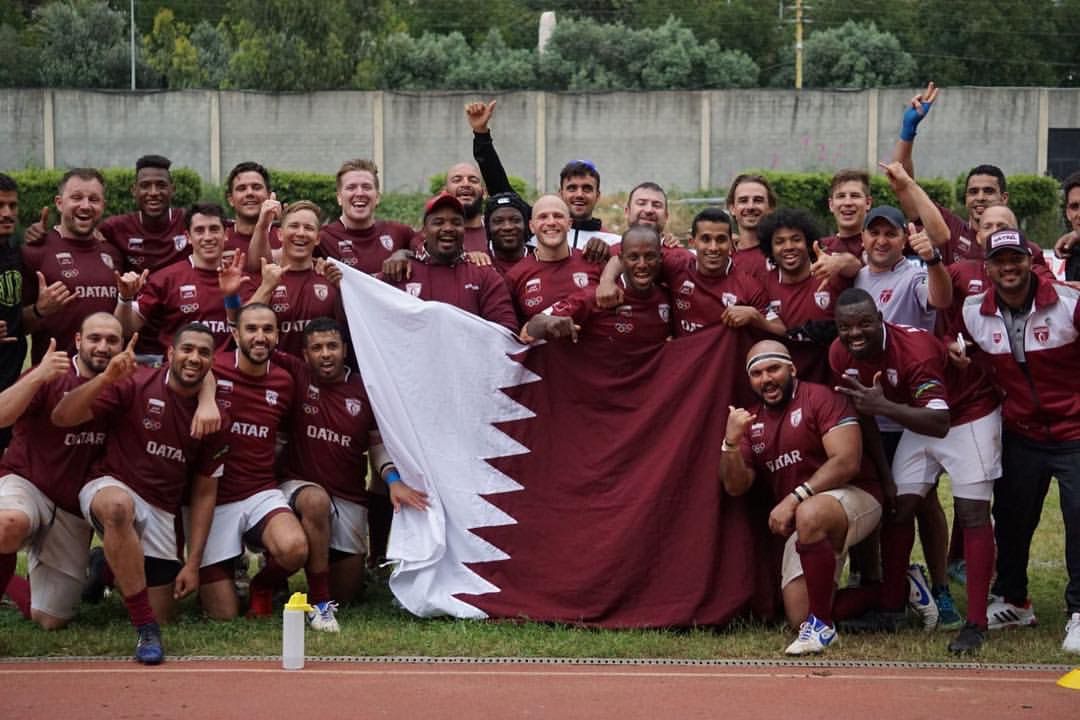
DOHA: The Qatar Rugby Federation is intensifying efforts to expand the sport’s footprint in the country and build a competitive national team ahead of the 2030 Asian Games, according to board member Saad Al-Abdullah.
Speaking in an exclusive interview with Sports2Day, Al-Abdullah said the federation is focused on grassroots development, youth programmes and strengthening Qatar’s regional competitiveness as rugby continues to grow steadily across the Gulf region.
“Rugby in Qatar started in 1973 through employees working at Qatar Petroleum, and since then the sport has continued to grow until the official federation was established in 2016,” he said.
Al-Abdullah, who was also among the players involved in forming Qatar’s first national rugby team in 2006, said the federation has since become a full member of both Asia Rugby and World Rugby, opening more opportunities for participation and development.
He explained that Qatar Rugby currently focuses mainly on the sevens and 15s formats, with particular emphasis on rugby sevens due to its Olympic status and Qatar’s preparations for the 2030 Asian Games in Doha.
“We are now focusing on building a strong Qatari team capable of competing at the Asian Games. Our dream is to win a medal in 2030,” Al-Abdullah said.
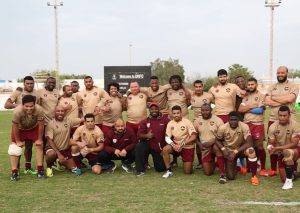
According to him, rugby participation in Qatar has grown to between 300 and 400 players across various age categories and divisions, including men’s, women’s, under-18 and under-15 teams. The federation currently oversees clubs such as Doha Rugby, Oryx, Titans, Blue Falcons and Camels.
On the women’s side, Qatar Rugby has also intensified efforts to promote female participation through programmes supported by World Rugby.
“We are involved in the World Rugby programme for women and we want to help grow women’s rugby in Qatar,” he said.
Al-Abdullah noted that the federation’s long-term strategy is centred on youth development through schools and grassroots programmes. Rugby has already been integrated into the Schools Olympic Programme under the Qatar Olympic Committee, with participation expanding significantly over the past two years.
“In the first year, we only had two or three schools involved. This year we reached six schools, including Qatar Leadership Academy, Jassim bin Hamad and Ahmed bin Hanbal schools,” he said.
The next phase, he explained, will focus on introducing rugby to younger age groups beginning from under-10 and under-12 categories.
“Our focus for the next few years is on youth because we need to create a strong platform for rugby in Qatar,” he added.

The federation is also working to transition former players into coaching, refereeing and administrative roles to help transfer knowledge and experience to the younger generation.
Beyond local development, Qatar Rugby has continued to compete internationally. Al-Abdullah confirmed that Qatar will participate in upcoming Asian competitions, including the Asia Trophy in rugby sevens and the Division One competition in the 15s category later this year.
He said Qatar is currently just one step away from breaking into Asia’s top five rugby nations in the 15s format.
“If we win the Division One tournament, we will move into the top five in Asia,” he said, noting that countries such as Japan, Kazakhstan, China, Chinese Taipei and the UAE currently occupy leading positions in the region.
The local rugby calendar currently includes sevens, 15s and 10s competitions, with leagues played in round-robin formats before knockout stages. The federation also organises an annual North vs South festival match at the end of the season to celebrate standout performers and honour the best players, referees and breakthrough talents of the year.
Despite the progress made, Al-Abdullah admitted that rugby still faces challenges in terms of public awareness and media visibility.

“A lot of people do not know what rugby is doing in Qatar because our information has remained closed,” he said. “Now we are focusing on social media, videos, posters and communication with the media to promote rugby more effectively.”
He added that participation in community initiatives, including events at 3-2-1 Qatar Olympic and Sports Museum, has already helped attract new players and increase public interest in the sport.
Reflecting on his personal journey, Al-Abdullah said rugby taught him discipline, commitment and respect.
“In rugby, respect is everything. Players respect referees, teammates and opponents. After every game, everyone comes together like a family,” he said.
Looking ahead, he expressed confidence that rugby will continue to grow in Qatar and across the Gulf region, particularly with neighbouring countries such as Saudi Arabia, Bahrain and the United Arab Emirates expanding their rugby programmes.
Al-Abdullah also revealed that Qatar will host Saudi Arabia in an international ranking match on May 15 at Onaiza Stadium, describing the fixture as another important step in the national team’s development.