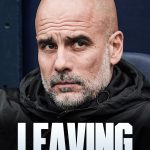



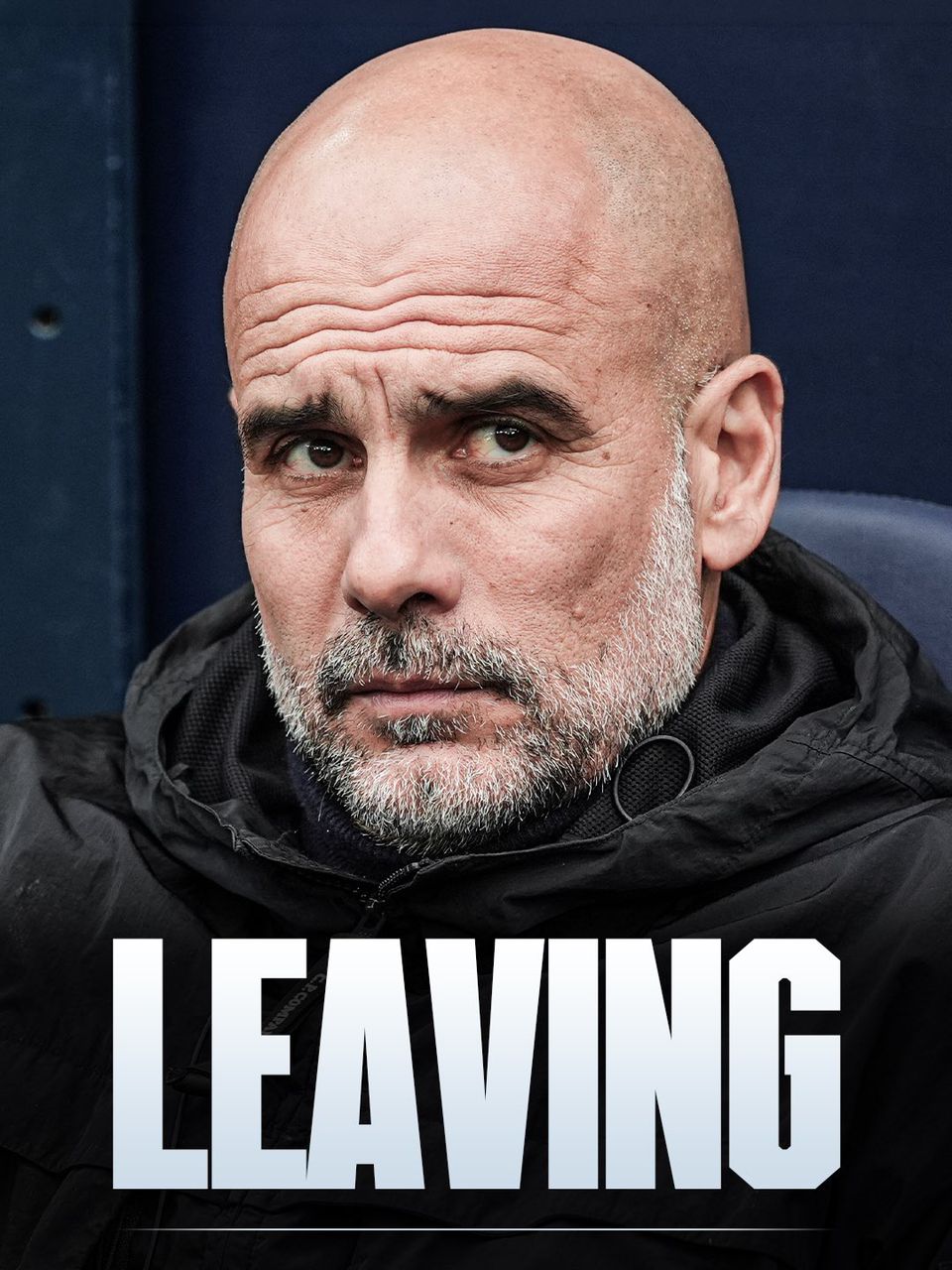
After a decade that reshaped English football forever, Pep Guardiola is preparing to walk away from Manchester City.
Multiple reports across England now indicate that Guardiola has informed Manchester City of his decision to leave the club at the end of the season, regardless of whether City secure another Premier League title before the campaign concludes.
And with the end of one of football’s greatest managerial dynasties approaching, Manchester City already appear to have their successor lined up.
Enzo Maresca.
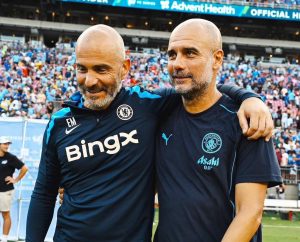
The former Chelsea head coach and one-time Guardiola assistant is now widely expected to take over at the Etihad in what could become one of the most fascinating managerial transitions in modern football. Reports suggest City have been working behind the scenes for months on succession planning, with Maresca emerging as the leading candidate long before his departure from Chelsea earlier this year.
If confirmed, it would mark the beginning of a completely new era for Manchester City — and the emotional conclusion of arguably the most dominant managerial reign English football has ever witnessed.
When Guardiola arrived at City from Bayern Munich in 2016, Manchester City were already an ambitious club with financial power and growing stature. But what followed over the next 10 years elevated the club into global football royalty.
Under Guardiola, City became the defining team of the Premier League era.
The Spaniard transformed not just Manchester City, but English football itself. Possession football became faster, more positional, more technically demanding, and more tactically sophisticated. Full-backs inverted into midfielders. Goalkeepers became playmakers. Center-backs became creators. Control became the ultimate weapon.
And most importantly — Guardiola turned City into serial winners.
During his decade in Manchester, Guardiola won 20 major trophies with the club, including six Premier League titles, multiple domestic cups, and the UEFA Champions League as part of the historic 2022/23 treble-winning campaign.
City broke record after record under his leadership.
They became the first Premier League side to reach 100 points. They produced one of the longest winning streaks in English football history. They dominated possession unlike any team the league had previously seen. And perhaps most impressively, they maintained excellence over an entire decade in a league widely considered the most competitive in world football.
But Guardiola’s influence extended beyond trophies.
He developed generations of elite players and elevated stars into world-class champions. Kevin De Bruyne evolved into one of the greatest midfielders of his generation under Guardiola. Phil Foden became the face of City’s academy revolution. Rodri emerged as arguably the world’s best holding midfielder. Erling Haaland shattered goalscoring records within Guardiola’s machine.
Even rival clubs were forced to evolve because of him.
Managers across England adapted tactically to compete with Guardiola’s City. Pressing structures changed. Build-up patterns evolved. Recruitment strategies shifted. The entire identity of modern Premier League football became shaped by Guardiola’s ideas.
Now, Manchester City face the challenge few clubs ever truly survive smoothly: replacing a revolutionary.
And that responsibility appears set to fall on Enzo Maresca.
For City’s hierarchy, Maresca represents continuity rather than disruption. He already understands Guardiola’s tactical principles after previously working within City’s coaching structure during one of the club’s most successful periods.
But this is also a completely different challenge from Chelsea.
At Stamford Bridge, Maresca largely functioned as a head coach focused primarily on training sessions, match preparation, and player development. At Manchester City, he would step into a far more powerful managerial structure — one where he is expected to help shape recruitment, squad building, tactical direction, and the long-term identity of the club itself.
In many ways, City believe Maresca is not simply inheriting Guardiola’s team.
They believe he is inheriting Guardiola’s footballing philosophy.
Still, replacing Guardiola may ultimately prove impossible in the purest sense. Managers do not just replicate 10 years of dominance, tactical innovation, and cultural transformation overnight.
What Guardiola built at Manchester City was more than a successful team.
It became an era.
And now, as City prepare for life after the greatest manager in their history, English football prepares to say goodbye to one of the most influential coaching reigns the sport has ever seen.