Temi Kings
Global Football Bureau
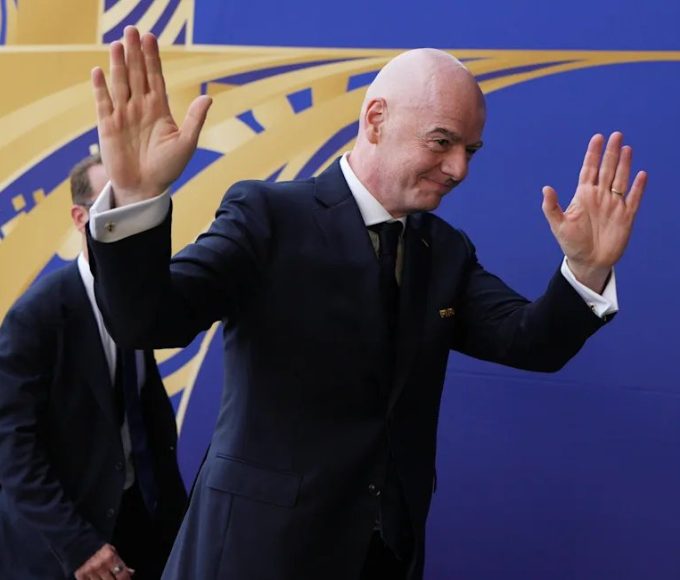
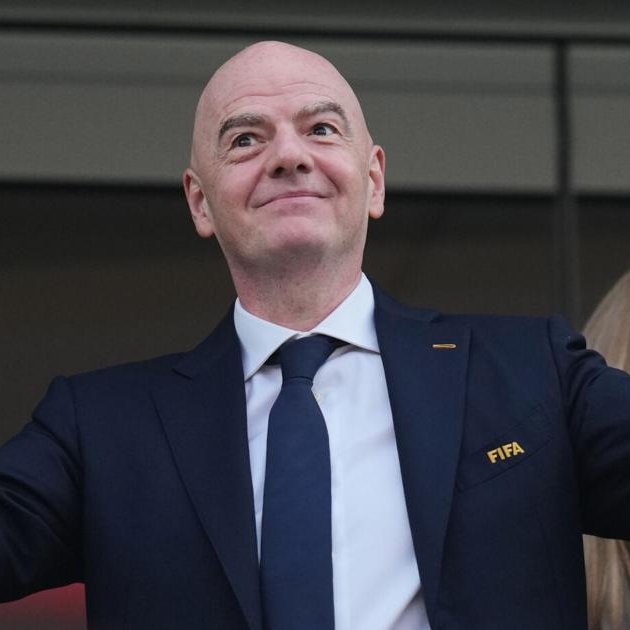
Just as the 48-team 2026 FIFA World Cup reaches its absolute boiling point, football’s governing body is already plotting the next massive shift in the sport’s global landscape. In a move that has sent shockwaves through the footballing community, FIFA President Gianni Infantino confirmed that the organization will officially examine a proposal to expand the men’s World Cup to a staggering 64-team format in time for the historic 2030 tournament. Speaking to Swiss media, Infantino revealed that the sweeping structural proposal will be pushed directly to the relevant governing committees immediately following the conclusion of the 2026 finals. The development comes amidst a tournament that has already shattered records as the first 48-team, 104-match iteration in history. Now, world football looks poised to reshape its blueprint yet again.
Defending the vision behind a potential 64-nation tournament, Infantino emphasized the narrowing competitive gap across international football and the necessity of providing emerging football nations with concrete pathways to the sport’s biggest stage. He stated that this is certainly an issue that will be looked at and discussed in the relevant committees after this World Cup, explaining that when you organize a World Cup, it’s essential that you organize it for the whole world. He added that it’s not just Europe and South America, but the entire world, and that every nation should be able to dream of taking part in the World Cup. Infantino highlighted the success of the 48-team expansion, pointing to the surging standards across Africa, Asia, and North America, while warning that limiting tournament availability strips developing nations of the financial and sporting incentives required to maintain long-term progression.
Shifting the tournament from 48 to 64 teams would require a total overhaul of the traditional grouping phase. While a 48-team layout forces a somewhat convoluted structure featuring either groups of three or heavily calculated third-place safety nets, a 64-team tournament introduces pristine mathematical symmetry. The competition would consist of 16 distinct groups of 4 teams each, with the top two teams from every single group cleanly advancing to a straight, cut-throat round-of-32 knockout bracket commencing immediately from the first week of tournament play. Under this proposed model, the total match inventory would explode to a massive 128 total matches, marking a 24-match increase over the 104 matches played in the 48-team structure.
The timing of the proposal adds an immense layer of logistical complexity. The centennial 2030 World Cup is already designated as a multi-continental historical event. To celebrate 100 years of the tournament, the opening three ceremonial matches are scheduled to take place in South America across Uruguay, Argentina, and Paraguay, before the entire tournament caravan moves to the primary co-hosts in Morocco, Portugal, and Spain. Managing a 64-team field across six countries and three distinct continents would represent the most complex logistical undertaking in the history of global entertainment.
As expected, the announcement has immediately split the global footballing landscape down the middle. Proponents of the 64-team expansion argue that it matches the natural demographic evolution of the sport. Emerging confederations like CAF in Africa and AFC in Asia would see their qualification allocations expand significantly, providing life-changing infrastructure investments and marketing power to historically marginalized football ecosystems. History supports this trend, as previous expansions to 24 teams in 1982 and 32 teams in 1998 were initially met with intense skepticism but eventually paved the way for modern powerhouses like Croatia and Morocco to emerge.
Conversely, the proposal faces immense pushback from domestic league syndicates, managers, and player welfare advocates. With the domestic calendar already bursting at the seams due to expanded club formats, critics argue that adding more international matches forces elite athletes into a dangerous cycle of physical exhaustion. Furthermore, purists express concern that a 64-team pool could drastically dilute the elite competitive standard of the group stages, making qualification too accessible and diminishing the prestige of reaching the finals.
For now, the 64-team World Cup is strictly a formal exploratory initiative. No definitive executive decisions will be enacted until FIFA’s administrative councils and member associations review the thorough operational reports following the conclusion of the final match of the 2026 cycle. However, with Gianni Infantino aggressively driving the vehicle of global expansion, the momentum appears entirely undeniable, and international football may very well be on the precipice of an era where nearly one-third of the globe arrives at the party.