



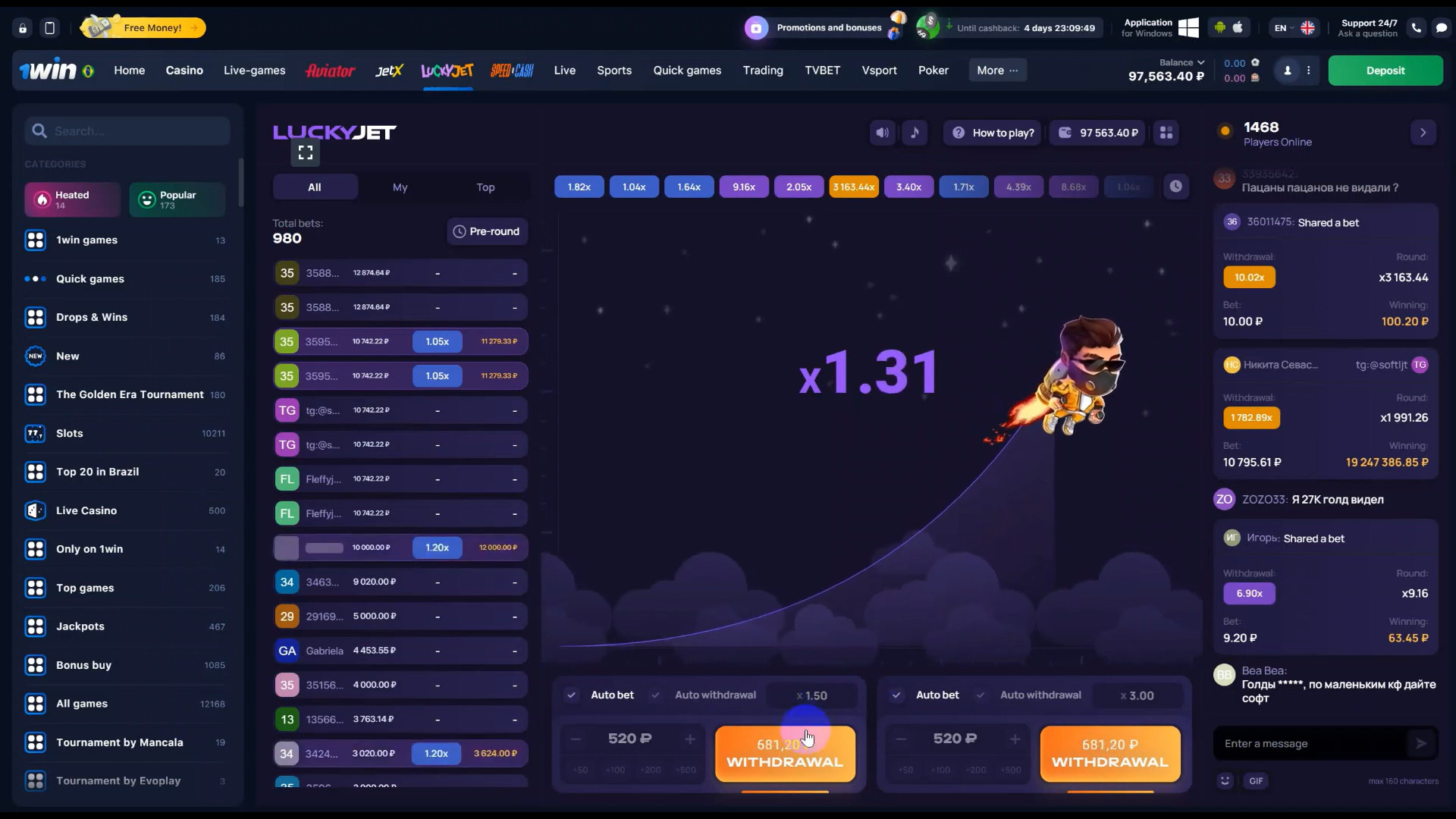
In the dynamic world of online crash gaming, where milliseconds and clarity can shape the entire user experience, we are observing a major change with the Lucky Jet game. The latest interface redesign, now entirely on offer to players in the UK, marks a pivotal shift towards user-friendly, streamlined, and very easy-to-use gameplay. This overhaul is not merely a surface-level refresh; it is a core reconsideration of how players engage with the game’s functions, from the starting bet placement to the thrilling moment of a cash-out. Our analysis indicates that the redesign precisely tackles common points of friction, substituting them with a smooth, visually coherent space that supports both beginners and veteran veterans. The emphasis is directly on lowering cognitive load, making sure that the adrenaline of the game comes from the tactical decisions, not from finding your way around a cluttered layout. This dedication to user-centric design sets a new benchmark for the type within the UK market.
The Thinking Behind the Lucky Jet Redesign
When approaching the visual update of the Lucky Jet game, the design team began with a core idea: clearness must come before complexity. In an space often crowded with blinking figures and heavy data displays, the objective was to build a calm control hub from which players could carry out their tactics with confidence. We noticed that earlier versions, while practical, could sometimes confuse, especially when multiple rounds and data statistics were involved. The new design adopts a uncluttered, almost minimalist aesthetic, using hues and lettering not for adornment but for effective messaging. High-contrast elements steer the eye naturally to the most key actions—placing bets, watching the Lucky Jet’s climb, and cashing out. This approach applies to every element, ensuring that the interface comes across as a seamless part of the player’s intention, clearing hurdles and promoting a more engaging and controlled gaming round for the UK players.
Core Visual and Usability Enhancements
The tangible upgrades in the Lucky Jet design are readily evident upon loading the game. A more liberal use of space and a sophisticated colour palette reduce visual noise, enabling the central gameplay element—the jet’s flight path—to take clear precedence. Key informational widgets, such as the current multiplier, bet amount, and potential win, are now displayed in bigger, bolder fonts against subdued backgrounds, making them legible at a glance. We have also seen a substantial upgrade in the responsiveness and tactile feedback of interactive elements. Buttons provide clear visual confirmation when clicked, and the overall flow from screen to screen is fluid. Perhaps most importantly, the game’s state is always obvious; whether you are in a betting phase, mid-round, or reviewing history, the design conveys your position within the game loop effortlessly. These are not minor tweaks but dedicated efforts to elevate usability to a professional standard.
Optimized Betting and Withdrawal Process
At the center of the Lucky Jet experience lies the key process of wagering and determining when to withdraw. The redesigned interface has thoroughly refined this core workflow. The betting panel is now integrated into a single, very intuitive module. Players can change their stake with smoother incremental controls or set a direct value with simplicity, and the potential win adjusts in real-time with prominent display. The cash-out button, arguably the most important control, has been assigned a position of utmost priority and a unique, engaging visual design that makes it impossible to miss. We value the addition of one-touch bet options and quick-repeat functions, which substantially hasten the process between rounds. This optimization means players can focus more on studying the jet’s flight patterns and developing their exit strategy, rather than wrestling with the mechanics of betting. The whole process feels fast, secure, and gratifyingly direct.
Improved Game Statistics and History Panel
Informed decision-making is a pillar of strategic play, and the revamped Lucky Jet game provides superior tools for analysis through its enhanced statistics and history panel. Before, historical data could appear like a raw data dump. Now, it is shown as a clear, digestible visual narrative. The round history is not just a list of numbers but a graphical chart that can help spot trends at a glance. We believe the following key improvements particularly impactful for UK players looking to refine their approach:
- A real-time graph displaying the multipliers of recent rounds, allowing for quick pattern recognition.
- Filterable and sortable history, enabling players to review specific segments of their gameplay.
- Personal statistics dashboard presenting key metrics like average cash-out multiplier and total rounds played.
- Improved colour-coding in the history log to separate between rounds that ended early versus those that reached high multipliers.
This revamped panel turns retrospective data into a proactive strategic asset, empowering players with insights that were previously cumbersome to extract.
Inclusive Design and Mobile Optimization for UK Players
A current online game must perform seamlessly across every device, and the Lucky Jet redesign lays a heavy priority on wide accessibility and outstanding mobile optimization flytakeair.com. Recognising that a significant portion of the players in the UK plays on smartphones and tablets, the interface now includes a completely adaptive layout that conforms gracefully to any screen size. Touch targets are appropriately sized and spaced to reduce mis-taps, a common frustration in older mobile versions. Furthermore, we have noted conscious actions to enhance accessibility: colour choices account for contrast ratios for visually impaired users, and the coherent arrangement of information supports screen reader technology. The game starts up more rapidly and performs better on a broader spectrum of hardware, guaranteeing that the experience is steady and top-notch whether enjoyed on a desktop in London or a mobile device on the go. This devotion to inclusive design widens the game’s allure and practicality.
Comparing the Previous and Updated Lucky Jet Interface
To truly understand the magnitude of change, a thorough contrast between the legacy and new Lucky Jet interfaces is helpful. The older edition, while functional, worked with a more fragmented structure. Primary functions were occasionally separated, and the graphic priority was less distinct, which might result to moments of uncertainty. Data was available but rarely arranged in the optimal useful format. The revamped experience, in comparison, appears unified and instant. The journey from newcomer to competent gamer is faster because the title’s rules and options are much obvious. We have compiled a short summary of the most significant changes seen by the UK gaming audience:
- Visual Sharpness: From a cluttered interface to a focused, tidy space where the gameplay activity is the unquestioned star.
- Control Arrangement: From dispersed keys to a integrated, comfortable operation panel that fits the natural flow of action.
- Data Layout: From unprocessed number data to graphical data that actively assist in strategy formation.
- Performance: From acceptable loading times to near-instantaneous response, crucial for a fast-paced multiplier experience.
This progression represents a refinement of the offering, aligning it with the demands of a demanding UK market habituated to premium digital products.
Frequently Asked Questions
What constitute the main benefits of the updated Lucky Jet design?
The new interface offers markedly better navigation, quicker bet placement, and a cleaner visual layout. Key data like the multiplier and balance is more prominent, cutting down on distraction. The general user experience becomes smoother and more intuitive, enabling players to focus completely on their gaming strategy rather than on figuring out the controls.
Are the game mechanics or RNG influenced by the redesign?
Certainly not. The redesign constitutes purely a front-end, user interface (UI) and user experience (UX) update. The core game mechanics, random number generation (RNG), and underlying fairness algorithms stay completely unchanged. The redesign just makes working with the tested, certified game system a lot easier and more enjoyable.
Is it necessary to download a new app or update software?
If you game via a web browser on desktop or mobile, the update is seamlessly—simply visit the website to access the new interface. For dedicated app users, you could need to update your application through the official app store to receive the latest version featuring the full redesign and all performance improvements.
Are there the new statistics tools present on mobile?
Yes, the enhanced statistics and history panel is thoroughly embedded and optimized for mobile devices. The data is presented in a adaptive, clear format designed for smaller screens, with mobile-friendly controls for filtering and sorting your game history. All strategic insights are accessible on the go.
Has the betting process actually become faster?
Absolutely, the process is significantly quicker. Unified controls, single-tap bet options, and a more responsive interface significantly shorten the time between rounds. The streamlined workflow reduces clicks and screen focus shifts, facilitating fast bet placement and adjustment, which is vital for a high-speed game like Lucky Jet.
Is there any risk of losing my account balance or betting history with this update?
No. The update only impacts the visual presentation layer. All account data, such as your balance, transaction history, and bet records, is kept safely on the server-side and continues completely intact. You will log in to find everything precisely as you left it, but within the new, improved interface.
How can I share my thoughts about the updated Lucky Jet layout?
Player feedback is greatly valued. You can usually submit your thoughts directly through a “Feedback” or “Support” section within the game’s interface or on the official website. Many operators also welcome input via their customer service channels. Your comments help influence future refinements and updates.